
By Justin Lammers, owner of Grab N Go Kayaks and creator of the KayakDIY YouTube channel
Last updated: October 13, 2026
Quick answer: Cape Coral’s canals hold snook, redfish, juvenile tarpon, mangrove snapper, sheepshead and spotted seatrout in the salt, plus largemouth bass in the freshwater interior. A kayak lets you work docks, seawalls and mangrove points quietly from your own canal. You need a Florida saltwater fishing license, and rules change, so check myfwc.com before you keep a fish.
Cape Coral has more than 400 miles of canals, according to the city’s Marine Services Division, and almost every one of them is a fishing spot that nobody walks to. That is the case for a kayak. You skip the ramp, the trailer and the engine noise, and you slide up to a dock shadow or a mangrove point that a boat would blow right past.
Canal fishing is the style I recommend first to visitors. It is protected from most wind, the water is calm enough for a beginner, and the fish sit next to structure you can see. When I deliver a fishing kayak to a canal home in southwest Cape, the first thing most guests do is look down at their own seawall and ask what lives under it. The answer is usually more than they expect.
This guide covers what you can catch in each season, which parts of a canal to fish, how tide changes the bite, which of our kayaks suits an angler, and what the license rules look like for a visitor.
In this guide
- Why canals work from a kayak
- Species by season
- Canal structure: where to cast
- Tide and timing
- Fishing kayak vs Malibu PDL
- License, snook permit and FWC rules
- Rigging and canal manners
Why canals work from a kayak
A canal is a long, narrow, protected bay with structure on both sides. Seawalls hold barnacles and crabs. Docks throw shade. Mangrove edges hold baitfish. All of it is within a short cast of the middle of the water, and a kayak puts you in that zone without spooking anything.
A kayak is also quiet. Fish in a canal are used to boat traffic, but they still notice a hull slapping and an engine idling over their heads. A paddle stroke is a different signal. Add the fact that you can launch from your own dock, as our vacation rental delivery customers do, and you can fish a hot early window without loading a vehicle.
Not every Cape Coral canal is the same water, though. Gulf-access and river-access canals carry saltwater fish. The interior canals behind the freshwater weirs are a different system with different fish. Our post on where your canal goes explains how to tell which one you are on. Ask your host or look at a map before you pick targets.
Species by season
Months below are local rules of thumb from years on this water, not a guarantee. Water temperature, rain, wind and red tide all move fish. Treat the table as a starting point, then watch what the bait is doing.
| Species | Where in a canal | Rule-of-thumb best months | Notes |
|---|---|---|---|
| Snook | Dock shade, lighted docks at night, canal mouths, mangrove points | Warm months near the river and passes; deeper canals in cold snaps | Special permit and closed seasons apply. See the rules section. |
| Redfish | Mangrove edges, shallow flats at canal mouths, oyster-lined points | Fall and spring are reliable | Slot size and bag limits apply. |
| Juvenile tarpon | Deeper canals and basins, rolling on the surface | Warm months | Catch and release is the norm. A harvest tag is required to keep one. |
| Mangrove snapper | Dock pilings, seawall bases, deeper shaded water | Most of the year, stronger in summer | Small fish are common. Check size limits. |
| Sheepshead | Barnacled pilings and seawalls | Cooler months | Light tackle and patience. Check limits. |
| Spotted seatrout | Grass edges, canal mouths, moving water | Cooler months and spring | Check bag and size limits. |
| Jack crevalle | Open canal water and basins, chasing bait | Warm months | Strong fighters. Not usually kept. |
| Largemouth bass | Freshwater interior canals, weedlines, docks | Year-round | Freshwater species. Separate license rules apply. |
One honest limit on this list: we left out peacock bass. They are a South Florida freshwater fish, but we could not confirm them in Cape Coral’s canals, so we are not going to promise them.
If you only chase one fish, make it snook. They live under lighted docks, they ambush bait at canal mouths, and they are the fish visitors ask about most. Our fuller note on wind, tides and weather helps you match the day to the target.
Canal structure: where to cast
Docks and seawalls
Fish the shade line first. In the morning that is the west side of the canal, and in the afternoon it flips. Pitch a live shrimp or a small soft plastic parallel to the seawall and let it fall along the wall. Mangrove snapper and sheepshead sit tight to barnacled concrete and pilings. Move slowly and watch for flicks of bait near the dock shadows.
Mangrove points
Where a canal bends or ends at a mangrove-lined basin, you get a hard edge with roots, shade and moving water. Redfish and snook push in on a rising tide. Stay a long cast away and work the edge instead of paddling into the roots.
Canal mouths and intersections
The places where a canal meets the Caloosahatchee River, or where two canals cross, funnel bait. Current changes the angle of the bite, so position the kayak up-current of the structure and drift a bait down to it. If you are fishing near the Cape Coral Bridge or the Midpoint Memorial Bridge, stay clear of boat traffic and work the calmer canal side, not the open river channel.
Lights at night
Underwater dock lights draw shrimp and small fish, and snook follow. Night fishing from a kayak can be productive but it adds risk. Florida requires a white light on a paddlecraft after dark, and our rentals do not list a light as included, so bring your own. Our post on Florida kayak laws covers lights, and our kayak safety guide covers going out in low light.
Tide and timing
Moving water beats still water. In a Gulf-connected canal, the hour or two around a tide change gets fish feeding at mouths and points. A rising tide pushes bait into shallow edges. A falling tide pulls it out past the structure. Pick the structure that matches the tide you have.
Check tide predictions at NOAA Tides and Currents for a station near the Caloosahatchee, and check wind before you leave the dock. The National Weather Service Tampa Bay office covers Lee County. Wind under about 10 miles per hour is comfortable in a canal, and a canal usually gives you a lee side when it blows harder.
Early morning and the last hour of light are the best windows, and they are also when the canal is quietest. Midday in summer is hot. If you must fish it, pick shaded walls and drink more water than you think you need.
Fish from your own dock this weekend
We deliver a fishing kayak free to your Cape Coral or Fort Myers dock, from $60 a day with pickup included. Skip the ramp and be on the water at first light.
Fishing kayak vs Malibu PDL: which is best for fishing?
People searching for the best kayak for fishing usually want to know two things: will it hold still, and can I keep my hands free. We have two good answers.
| Feature | Fishing kayak | Single pedal kayak (Old Town Ocean Kayak Malibu PDL) |
|---|---|---|
| Price (1 day / 2 days / 3 to 7 days) | $60 / $100 / $180 | $100 / $200 / $350 |
| Propulsion | Paddle | PDL Drive pedals, forward and reverse, with rudder steering |
| Hands free for casting | Paddle down, rod up | Yes, you can hold position while you fish |
| Rod holders | Text us to confirm what is on the boat | 3 flush-mount rod holders |
| Size and weight | Stable sit-on-top built for anglers | 12 ft long, 34.5 in wide, about 105 lb |
| Usable capacity | Paddler 250 lb or less; varies by kayak | About 250 lb usable (360 lb total) |
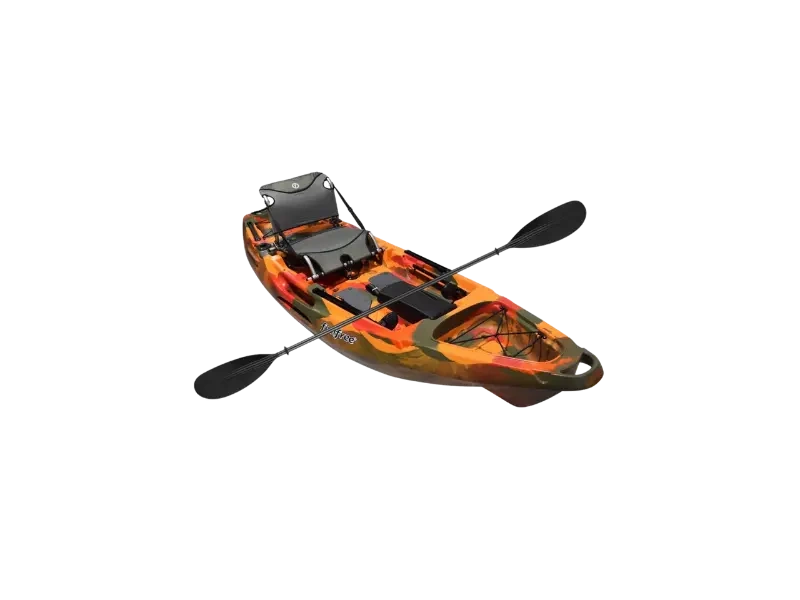
Pick the fishing kayak if you want a simple, stable platform at the lowest price. It is the right call for a half-day on a quiet canal. Pick the single pedal kayak if you fish moving water or like to hold position near structure while you work a bait. Pedaling forward and reverse keeps your hands free and lets you back off a dock without a paddle stroke. If you want a deeper read on the pedal drive, see our pedal kayak post.
You can see all the options on the fishing kayak rental page. Fishing gear is not included, so bring your own rods and tackle. Paddle, life vest, dry bag and safety whistle are included. Not sure which fits your trip? Read Single vs Tandem vs Pedal vs Fishing and our 2026 price guide.
License, snook permit and FWC rules
This is the part that changes, so read it with the date in mind. We checked the Florida Fish and Wildlife Conservation Commission (FWC) pages on October 13, 2026. Always confirm on myfwc.com before you keep anything.
Saltwater fishing license
Anyone taking saltwater fish in Florida needs a saltwater fishing license, with some exemptions listed by FWC. At the time we checked, non-resident prices were $17 for 3 days, $30 for 7 days and $47 for a year, and vendors may add a small fee. The shoreline-only license does not cover fishing from a boat or from a shoreline reached by boat. FWC does not say whether a kayak counts as a boat for that purpose, so if you are launching a kayak, assume you need the regular license.
Snook permit and season
Snook need a separate snook permit in addition to your license. FWC lists it at $10 per year. Cape Coral falls in FWC’s Charlotte Harbor snook region. As of our check, harvest in that region is closed December 1 through the end of February and May 1 through September 30. It reopened October 1 under FWC’s announced schedule, with a slot of 28 to 33 inches total length and a bag of one fish per person per day. Hook and line only. See the current page at myfwc.com snook regulations.
Redfish
FWC lists redfish in the Charlotte Harbor region as open year-round with a slot of 18 to 27 inches total length and a bag of one per person (two per vessel). Check the redfish page for changes.
Everything else
Mangrove snapper, sheepshead and spotted seatrout each have size and bag limits, and so does largemouth bass in freshwater. We are not printing those numbers here because they change. Look up each species on FWC’s page before you keep it. If the license question is unclear, call FWC. Don’t guess.
Rigging and canal manners
Keep the rig simple. A medium spinning rod, 10 to 20 pound braid, a fluorocarbon leader and a handful of jigheads, soft plastics and live shrimp cover most canal species. Tie a leash or a rod float to your rod so a hard strike does not take it overboard. Bring needle-nose pliers, a hook-out tool and a small net if you want to keep fish. A dry bag holds your phone and license.
The canal rules are mostly courtesy. Don’t tie off to a neighbor’s dock without permission. Keep your voice down. Respect posted signs and private property. If a manatee surfaces near your line, reel in and let it pass. Manatee zones and wildlife rules live at myfwc.com, and our post on where to see manatees shows how to share the water.
Sharks, stingrays and the occasional alligator live in these waters. We cover how to handle them in our canal wildlife safety post. Wear your life vest when fishing, not in a pile on the deck.
Want to go further than the canal?
Kayaks are great for canals and shallow bays. If you want offshore water, bigger fish or a captain who finds them for you, we point customers to partner charters on our fishing charters page. Inshore trips start at $350 for up to 4 people and offshore from $1,000 for up to 6, per that page. We do not run the charters, and we do not rent boats. For backwater flats fishing by kayak, read our Matlacha Pass and Pine Island Sound guide, or see how Matlacha delivery works.
Frequently asked questions
Can you kayak fish in the canals in Cape Coral?
Yes. The city has more than 400 miles of canals, and many connect to the Caloosahatchee River or the Gulf. Fish from your own seawall or paddle the canal. Respect private docks and posted signs, and carry the right Florida fishing license for the species you target.
What fish can I catch in Cape Coral canals?
Common targets are snook, redfish, juvenile tarpon, mangrove snapper, sheepshead, spotted seatrout and jack crevalle in saltwater canals, with largemouth bass in freshwater canals. What bites depends on the season, water temperature and which canal you are on.
Do I need a fishing license to kayak fish in Florida?
Most anglers do. Florida requires a saltwater license to take saltwater fish, with exemptions listed by FWC. The shoreline-only license does not cover fishing from a boat, and FWC does not say whether a kayak counts, so a regular license is the safe choice.
Do I need a snook permit?
Snook require a separate snook permit in addition to your saltwater license. FWC lists it at $10 per year. Check the current season, slot and bag limits on myfwc.com before you keep a snook, since harvest closes for part of the year.
What is the best kayak for fishing in Cape Coral?
For a stable, simple setup, our fishing kayak is the budget pick. For hands-free fishing, the Old Town Malibu PDL pedal kayak lets you hold position near structure and has three flush-mount rod holders. Both work well in canals.
What is the best time of day to fish a Cape Coral canal?
Early morning and the last hour of daylight tend to be best. Pick a window around a tide change when water is moving, and avoid midday heat in summer. Check the wind forecast and tide table before you launch, and plan to be back at the dock before the wind builds.
Can I fish at night from a kayak?
You can, and lighted docks attract snook. Florida requires a white light on a paddlecraft after dark, so bring your own, wear your life vest and tell someone your plan. Our rental does not list a light as included, so text us if you have questions about night trips.
Can I kayak fish at a public launch instead of my dock?
Yes, if you have a roof rack or truck and can transport the kayak safely. We do not deliver to public parks or boat ramps, so you would move the kayak yourself after we deliver it to your address.
Book a fishing kayak for your next canal trip
We bring the kayak to your waterfront home or vacation rental, free delivery in Cape Coral and most of Fort Myers, with paddle, life vest, dry bag and whistle included. Tell us your dates and address and we will confirm.
Call (605) 760-4448 · Text us · Request your rental online
See the fishing kayak rental or compare with the single pedal kayak.