
By Justin Lammers, owner of Grab N Go Kayaks and creator of the KayakDIY YouTube channel
Last updated: October 13, 2026
Quick answer: Kayaking in Cape Coral is safe for most people when you wear your life vest the whole time, drink water before you are thirsty, check the sky before you launch, stay out of boat channels, keep your phone in a dry bag, and tell someone where you are going. The main local risks are heat, thunderstorms, boat wakes and wind.
Most Cape Coral canals look like a swimming pool with houses around it. Flat water, palm trees, a pelican on a piling. That calm look is real, and it is also why people stop paying attention. Trouble usually starts at the end of a canal, where it opens toward the Caloosahatchee River and the wind and boat traffic change the whole day.
I have spent years paddling, rigging and reviewing kayaks on the KayakDIY channel, and now I deliver them to Cape Coral waterfront homes. The same few mistakes come up again and again.
Is kayaking safe?
Yes, for most healthy adults and kids who can swim and follow a few rules. A flat-water canal paddle is one of the gentler ways to get on the water.
It is not risk free. A kayak is legally a vessel, so you share the water with powerboats, and you are small and hard to see. The U.S. Coast Guard Auxiliary’s paddler safety guide states plainly that kayaks and paddleboards are vessels, so federal equipment rules apply. Our guide to Florida kayak laws covers the legal side. Think of safety as four things: gear, heat, weather and boats.
Life vest: wear it, do not sit on it
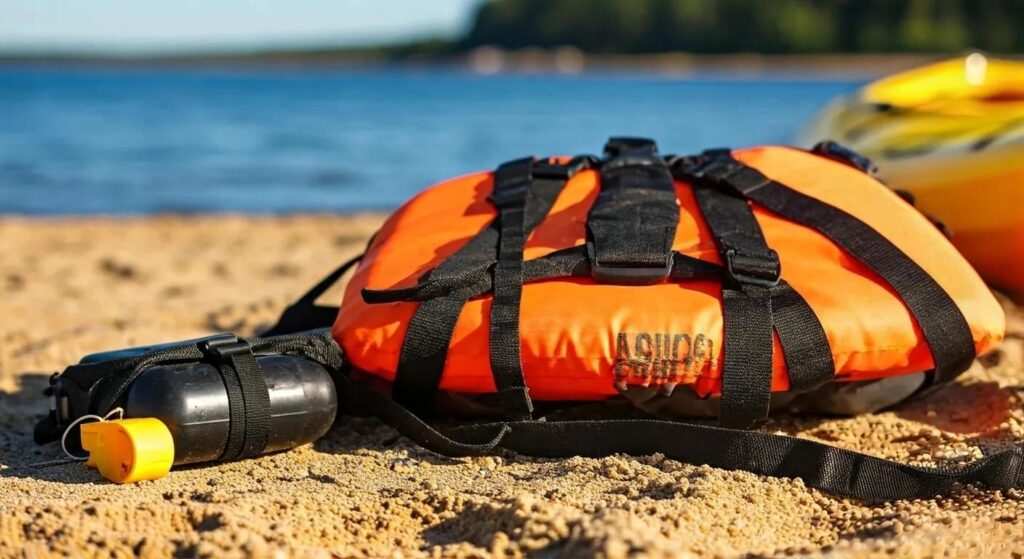
Every rental from us includes a life vest, paddle, dry bag and safety whistle. A vest only works if you are wearing it when something goes wrong, and things go wrong fast: a sudden wake, a slip while reaching for a dropped phone, a leg cramp. You will not have time to dig it out from under the seat.
Florida requires a Coast Guard approved wearable life jacket on board for each person, and children under 6 must wear one while underway. My advice goes further: put it on at the dock, buckle every strap, and take it off back on the dock. Keep the whistle clipped where you can reach it without letting go of the paddle. Kids need the right size, not the biggest one in the pile. Our guide to kayaking with kids in Cape Coral covers fit, and you can text us before delivery to ask what sizes we can bring.
Kayaking in Florida heat
Heat is the number one problem I see with visitors, well ahead of capsizing. Water bounces the sun back at you, a canal has no shade, and you can be fine at 9 a.m. and wrung out by noon. What works:
- Go early or late. Mornings and the last hour or two before sunset are cooler and calmer. See sunset and sunrise kayaking in Cape Coral.
- Start hydrated. Drink a full bottle before you launch and bring at least one more per person, where you can reach it.
- Cover up. A long-sleeve UPF shirt, brimmed hat and polarized sunglasses on a strap do more than sunscreen alone.
- Turn around early. Head back before you are tired. The paddle home is when people get into trouble.
The National Weather Service lists heavy sweating, fatigue, pale clammy skin, muscle cramps, dizziness, nausea and headache as signs of heat exhaustion. If you feel them, stop at the nearest dock, get into shade and sip water. Confusion, slurred speech, hot red skin or a body temperature above 103 degrees F signals heat stroke, and the advice is to call 911. Read the full list on the National Weather Service heat illness page. What to wear and bring is in our Florida kayak packing list.
Lightning, storms and wind
Lightning
Southwest Florida gets afternoon thunderstorms, and a kayak is the tallest thing on a flat canal. The National Weather Service says the only completely safe action is to get inside a safe building or vehicle, wait 30 minutes after the last rumble of thunder, and notes that most boating lightning injuries happen on small boats with no cabin. See weather.gov/safety/lightning-outdoors.
My rule: if you hear thunder, you are done. On a canal you are rarely more than a few minutes from a dock or seawall ladder. Check radar before you launch and again each hour if the sky is building. Our wind, tides and weather guide shows how to read the forecast for the water.
Wind and staying in the canals
Canals shield you from wind only partly. A long straight canal can funnel wind down its length, and the open water at its end has no cover at all.
Paddle into the wind first so it helps you home. If whitecaps or steady chop appear on the main canals, move to the narrow side canals or call it a day. New paddlers should stay inside their own canal system the first time. Our Cape Coral canals guide explains how the network connects.
Boat traffic and wakes
On most side canals the closest hazard is a homeowner puttering at idle speed. The wider canals and the Caloosahatchee are different. Bigger powerboats throw big wakes, and the water bounces off seawalls and comes back from the side.
- Assume the boat has not seen you. You sit at water level. Wear bright colors and keep the whistle handy.
- Stay out of the channel. Hug one side of the canal. Do not cross the river in the middle of a busy weekend.
- Cross at a right angle, and quickly. Check both directions, then paddle straight across.
- Take wakes bow first. Point the front of the kayak into the wake at a slight angle and keep paddling. A wake on your side tips people.
- Keep away from bridge pilings. Around the Cape Coral Bridge and the Midpoint Memorial Bridge the tide moves faster and boat traffic funnels through.
Safety gear is already in the price
Every Grab N Go rental includes a paddle, life vest, dry bag and safety whistle, and we deliver for free to Cape Coral and most Fort Myers addresses. Prices start at $45 a day and pickup is included.
Float plan and phone
A float plan sounds formal. It is a text message. Tell one person who is going, where you are launching, which way you are heading, when you expect to be back and who to call if you are not. The Coast Guard Auxiliary guide recommends sharing a plan with a trusted person and sending it close to departure time.
If everyone in your group is paddling, text a friend back home with a hard turnaround time, like “back by 11:30. If you have not heard from me by 12:15, call me, then call 911.”
Your phone belongs in the dry bag that comes with your rental, charged and clipped or tucked where you can grab it. A phone in a cup holder is a phone at the bottom of a canal. Know your address or nearest cross street, because rescuers cannot find “the canal near the pink house.” A waterproof handheld VHF radio is a good backup in open water like Matlacha Pass, though you do not need one for a canal paddle.
What to do if you capsize
Capsizing is rare in a stable rental kayak on flat water, and it is rarely dangerous when you are wearing your vest. The Coast Guard Auxiliary guide notes that sit-on-top kayaks are generally easier to re-enter than sit-inside kayaks. Know the plan before you need it.
Sit-on-top re-entry, step by step
- Stay calm and stay with the kayak. It floats, and so does your vest.
- Count heads. Make sure no one is under the kayak or tangled in a line.
- Flip the kayak upright. Reach across the hull, grab the far edge and roll it toward you.
- Collect the paddle. Keep one hand on the kayak.
- Climb on from the side or back. Put both hands across the seat area, kick hard like swimming, pull your chest onto the kayak, then twist and sit.
- If you cannot get on, hold the kayak and kick it to the nearest dock or seawall ladder.
A word about seawalls. Many canals here are lined with vertical seawalls, so there is often nowhere to climb out except at a dock, ladder or ramp. Note the nearest exit as you go. Our guide to getting in and out of a kayak from a dock or seawall shows the technique. Better yet, practice once by your own dock, vest on, on a warm day.
If a boat is coming while you are in the water, stay with the kayak and use your whistle. Tandem paddlers should agree on the plan before leaving: one person steadies the kayak while the other climbs on, then swap. The tandem kayaking guide has more.
Oyster cuts and water quality
Oysters grow on pilings, seawalls and mangrove roots across Southwest Florida’s brackish water, and their shells are razor sharp. Wear water shoes, not flip-flops, and do not grab shell-crusted edges bare-handed.
Any cut that touches brackish water deserves attention. The Florida Department of Health in Lee County says Vibrio vulnificus lives in warm, brackish sea water and can infect open wounds. Its advice: wash a wound right away with soap and clean water, cover it with a waterproof bandage, and get care promptly for redness, swelling, oozing or fever. See the Lee County Vibrio advisory.
For wildlife, FWC’s manatee guidance for paddlers says that if a manatee reacts to you, you are too close. More in where to see manatees and alligators, sharks and stingrays in Cape Coral canals.
When to call 911 or the Coast Guard
Call 911 first for anything life threatening: someone not breathing, a person missing in the water, heat stroke, a serious injury or a boat collision. Give your location first (the nearest address or cross street), then what happened. On the water, VHF Channel 16 is the traditional distress channel.
The U.S. Coast Guard covers the Cape Coral and Fort Myers waters through Sector St. Petersburg, and Station Fort Myers Beach is one of the stations listed under that sector. In an emergency you will normally reach them through 911 or VHF 16. For paddling classes and safety questions, the City of Cape Coral’s kayaking page lists a Coast Guard Auxiliary contact at (239) 549-1027. Call before you are in real trouble.
Before you launch checklist
| Check | Why it matters |
|---|---|
| Life vest on and buckled | Only works if worn. Required for children under 6 |
| Whistle clipped to the vest | Three blasts means help |
| Phone in the dry bag, float plan texted | Your link to 911, and someone knows your return time |
| Radar and wind checked | Thunder means off the water |
| Water, hat, sun protection | Heat is the most common problem |
| White light if near sunset | Required between sunset and sunrise |
New to this? Pick something stable, like our single kayak or tandem kayak. The guide to choosing a kayak compares them, and the first-time kayaker’s guide explains delivery day.
Frequently asked questions
Is kayaking in Cape Coral safe for beginners?
Yes. Calm canals are a good place to learn. Wear your life vest, stay in protected side canals for your first outing, avoid boat channels and check the forecast. Most problems come from heat, thunderstorms and boat wakes, not the kayak itself. Starting from your own dock keeps things simple.
Do I have to wear a life jacket when kayaking in Florida?
Florida requires a Coast Guard approved wearable life jacket on board for each person, and children under 6 must wear one. Adults are strongly advised to wear theirs. We suggest wearing it the entire time, because it does nothing if it is under the seat when you fall in.
What should I do if my kayak flips over?
Stay with the kayak, check that everyone is okay, flip it upright and climb on from the side or back by kicking and pulling your chest across. If you cannot, hold the kayak and kick it to the nearest dock or seawall ladder. Use your whistle if a boat is near.
How do I stay safe kayaking in Florida heat?
Paddle early or late, drink water before you launch and carry more, wear a UPF shirt, hat and strapped sunglasses, and take shade breaks. Turn around early. If you feel dizzy, nauseous or crampy, stop and cool down at a dock. Confusion or a very hot body means call 911.
What should I do if I hear thunder while kayaking?
Get off the water and indoors right away. The National Weather Service says to wait 30 minutes after the last rumble before going back out. A kayak on flat water is the tallest object around, and canals usually have a dock or ladder close by. Do not wait to see how it develops.
Can beginners kayak the Caloosahatchee River?
It is possible but harder than the canals, with more wind, current, boat traffic and wake. If you are new, stay on the canals first, then try the river with an experienced friend on a calm weekday morning. Read our Caloosahatchee River kayaking guide first.
What is a float plan and do I need one?
A float plan is a short message to someone you trust: who is paddling, where, when you will be back, and who to call if you are late. It takes a minute and may be the most useful safety habit for any paddle. Send it right before you launch.
Do I need a light on my kayak at night?
FWC says paddlecraft should carry a lantern or flashlight showing a white light between sunset and sunrise or when visibility is restricted. If your paddle runs into dusk, bring a bright flashlight or headlamp. Rentals from us do not include a light, so bring your own.
Paddle safe, paddle easy
We bring the kayak, paddle, life vest, dry bag and whistle to your Cape Coral or Fort Myers dock, and we pick it up when you are done. Free delivery in Cape Coral and most Fort Myers addresses, with rentals from $45 a day.
Call (605) 760-4448 · Text us · Request your rental online
See every option on our kayak rentals page, or read how booking works in our guide to booking a kayak rental in Cape Coral.