
Last updated: October 13, 2026
Quick answer: You can kayak the Caloosahatchee River from Cape Coral, but it is big, open water with boat wakes, a marked powerboat channel and wind against tide. Paddle it early on a calm day, hug the shoreline, and stay in your canal when the breeze is up or you are new to kayaking.
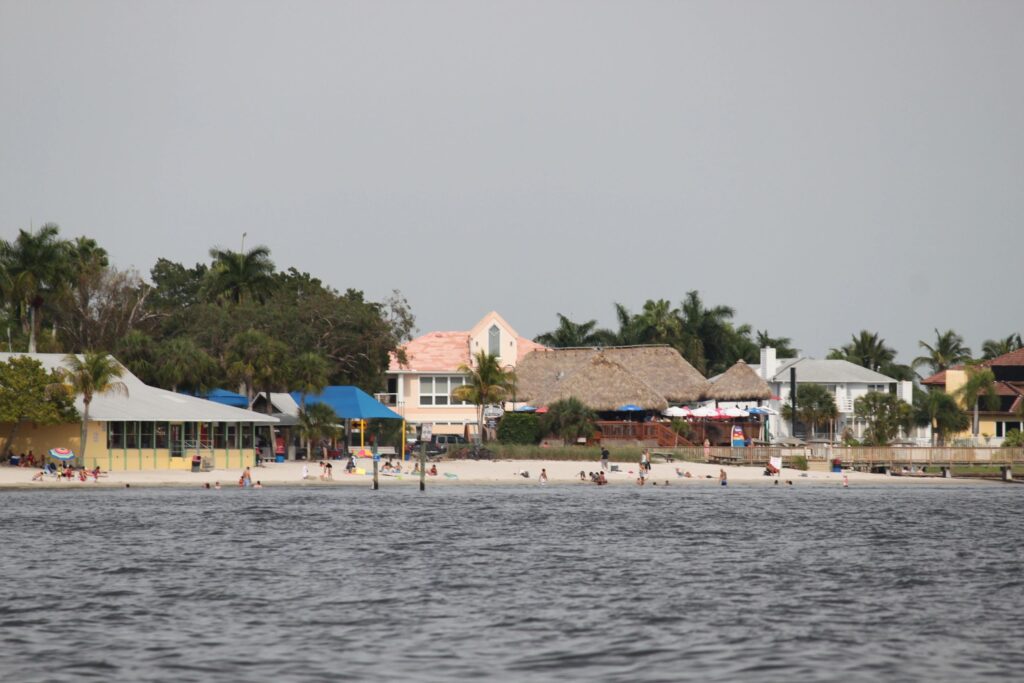
Drive over the Cape Coral Bridge and the Caloosahatchee looks like a lake. It is wide, flat on a calm morning, and dotted with sailboats and pelicans. Paddle it on the wrong afternoon and it looks very different: a steady fetch of wind, a long line of boat wakes, and a current under the bridges that you can feel through the paddle.
I live on a Cape Coral canal and I rig kayaks for a living, and my honest answer to “should I paddle the river?” is “sometimes.” The river is one of the best places in southwest Florida to paddle when conditions line up. It is also the place where I most often tell guests to turn around. This guide shows you which is which.
In this guide
- What the Caloosahatchee is, and where you can see it from a kayak
- Wakes, channel markers, wind against tide and bridges
- Manatees and wildlife on the river
- Freshwater releases and water clarity
- Upstream: creeks, Franklin Lock and what to skip
- When the river is a good idea and when to stay in the canals
- Frequently asked questions
What the Caloosahatchee is, and where you can see it from a kayak
The Caloosahatchee River runs from the Franklin Lock near Olga and Alva down through North Fort Myers and Fort Myers, and then along the southern edge of Cape Coral to San Carlos Bay and the Gulf. The Army Corps built the Franklin Lock and Dam for flood control, water control, navigation and to keep salt water from pushing upstream. By Wikipedia’s count it sits about 33 miles above the Gulf Intracoastal Waterway. Below it, the river is tidal.
The Great Calusa Blueway treats the river as the third phase of its nearly 200 mile paddling trail, which also covers Estero Bay and Pine Island Sound with Matlacha Pass. The Blueway site calls the Caloosahatchee its newest leg. The trail map for this phase is free from Lee County, and it is worth downloading before you plan a longer trip. Our Great Calusa Blueway guide covers the trail as a whole.
Landmarks you can use from a kayak
| Landmark | Where | Why it helps a paddler |
|---|---|---|
| Cape Coral Bridge | Cape Coral Parkway side to McGregor in Fort Myers | Fixed spans, 55 feet of clearance. The original span opened in 1964 and the eastbound span in 1989. Easy to see from far away. |
| Midpoint Memorial Bridge | Veterans Parkway (Cape Coral) to Colonial Boulevard (Fort Myers) | Opened October 1997. Also fixed with 55 feet of clearance. Four Mile Cove sits just north of it, and Everest Canal joins the river just south of it. |
| Bimini Basin | SE Cape Coral, off Cape Coral Parkway | The old waterfront of Cape Coral and a short destination from nearby canals. Four Freedoms Park overlooks it. |
| Jaycee Park | SE 20th Place, Cape Coral | Reopened April 30, 2026, with a lighted riverfront boardwalk and overlook you can paddle past. |
| Cape Coral Yacht Club | South shore of Cape Coral, on the river | Riverfront beach, fishing pier and marina per Lee County’s map. |
| Chantry Canal and Everest Canal | North and south of the Midpoint bridge | Two saltwater canals that open onto the river, listed by the city as paddler launches. |
| Caloosahatchee Creeks Preserve | North bank, North Fort Myers | Popash Creek launch off the river’s north side. |
| Fort Myers waterfront | North shore, downtown | Lee County lists Centennial Park, a yacht basin with floating docks, and Shady Oaks Park, which has a kayak launch onto Billy’s Creek. |
Both bridges are fixed spans, so there is no opening schedule to watch. You still need to stay clear of the pilings, where current speeds up and boats pass close.
Where your kayak starts matters
Plenty of our guests paddle to the river from a saltwater canal behind their rental. If you are staying in southeast Cape Coral or along a canal that opens onto the river, you may be able to go from your dock to the river in a few minutes, and that is the easiest way to try it. Ask yourself first how you will get back. Our canals guide explains how to tell where your canal goes.
If your canal is freshwater or does not reach the river, you can drive your delivered kayak to a launch yourself if you can transport it safely. The Best Places to Kayak in Cape Coral pillar lists launches that reach the river, including Horton Park, Rosen Park and Four Mile Cove. We do not deliver to parks or boat ramps. We deliver to waterfront homes, vacation rentals and suitable condos.
Wakes, channel markers, wind against tide and bridges
These are the four things that change the river from a lake into serious water.
Boat wakes
The river is a boating highway. Powerboats, sailboats, pontoon boats, jet skis and the occasional commercial vessel all share it. Lee County’s paddling notes for the Caloosahatchee say the river has no marked paddling trail, to avoid the powerboat channel where you can, and, if you must cross it, to stay to the right and turn the bow into the wake.
That last part is the one that matters. A kayak hit sideways by a wake can roll. A kayak pointed into it rides over. When a big boat passes, stop paddling forward, turn toward the wake and let it go under you. Wakes also bounce off seawalls and come back, so keep an eye behind you.
Channel markers
The channel is marked with numbered green and red markers. You do not paddle in the channel, but you do cross it, and the markers tell you where the big boats will be. As a general rule, stay outside the markers along the shoreline, cross at a right angle, and cross quickly and where you can see in both directions. Ospreys often nest on markers, so give those a wide berth.
Wind against tide
The Caloosahatchee is tidal below the lock, so the water moves in and out twice a day. Wind blowing against the direction the tide is moving steepens the waves into short, closely spaced chop. That is the condition that wears paddlers out and sometimes turns them back.
- Check the tide first. Look up the day’s predictions on NOAA Tides and Currents and find the nearest station to the Cape Coral Bridge.
- Then check the wind. The NWS Tampa Bay marine forecast lists wind speed and direction for the coastal waters.
- Compare the two. If the wind and the current are heading the same way, the water is smoother. If they oppose each other, expect chop even in moderate wind.
- Go early. Mornings are usually calmer than afternoons, when a sea breeze can build on open water. Our post on wind, tides and weather in Cape Coral covers the pattern in more depth.
Bridges and pilings
Water squeezes through the piling field under both bridges, so current can be stronger there than in open water, and eddies form behind the pilings. Boats also bunch up. If you want to paddle under a bridge, do it on slack water, go in a straight line, and keep your distance from the pilings. A bridge is not a place to stop and take a photo.
Start with a dock paddle, then try the river
We deliver kayaks free to your Cape Coral or Fort Myers dock, and our flat 3 to 7 day price ($120 for a single) gives you time to wait for a calm morning. Prices start at $45 a day, and pickup is included.
Manatees and wildlife on the river
The river is a working habitat. West Indian manatees, bottlenose dolphins, ospreys, brown pelicans and snook, redfish and tarpon all use it. Manatees are the headline: they move through the river and up its creeks, and in winter they head for warm-water refuges. Lee County’s Manatee Park is on the Orange River, and the park’s best-known manatee season runs from late December through February, according to a wildlife viewing site.
The FWC enforces manatee protection zones with speed and entry rules. Paddlers are not the main target of those rules, but signs are posted on the water, so read them. See the FWC’s manatee protection zones page for how they work. If a manatee surfaces near you, stop paddling, keep your hands to yourself and let it move on. We have a full guide on where to see manatees in Cape Coral and Fort Myers.
For dolphins, expect them near the mouth and around the bridges where bait gathers. They are curious but fast, and they do not appreciate being chased. Let them pass.
Freshwater releases and water clarity
The Caloosahatchee is a managed river. The Franklin Lock and Dam controls the flow of freshwater from upstream, and at times that water includes releases from Lake Okeechobee plus runoff from the surrounding basin. When more freshwater pushes down the river, the water often turns tea colored, and salinity drops in the lower river and in connected canals.
Clarity matters for two reasons. First, you will not see much under the kayak in tannic or murky water. Second, warm, nutrient-rich freshwater can feed blue-green algae blooms. The Florida Department of Environmental Protection tracks them on its Algal Bloom Dashboard, and it is worth a look before any paddle in the river or the canals that connect to it.
If the water looks like paint or has a scum or a strong smell, stay out of it and keep your dog out too. Blue-green algae can cause skin, eye and throat irritation, and dogs are at higher risk, according to Lee County’s water quality information. Rinse off after your paddle either way.
We keep this section short because conditions change by the week. The takeaway: check the dashboard, not a blog post, including ours.
Upstream: creeks, Franklin Lock and what to skip
Caloosahatchee Creeks Preserve
The easiest way to enjoy the upper river without the boat traffic is Caloosahatchee Creeks Preserve at 17100 McDowell Dr and 10130 Bayshore Rd in North Fort Myers (33917). The preserve is on the northern bank of the river. It has a canoe and kayak launch into Popash Creek, picnic pavilions, a boardwalk, trails and a restroom. Lee County notes that creeks like this can be inaccessible in low rainfall or at extreme low tide, so time your visit for higher water. You drive your delivered kayak there yourself.
W.P. Franklin Lock
The lock is the upstream end of the tidal river, roughly 33 miles from the Gulf by Wikipedia’s figure, and it is not a trip to plan from a Cape Coral canal. Typical operating hours are 7 a.m. to 5 p.m. daily, and the lock monitors marine VHF channel 13, according to Wikipedia’s summary. The Army Corps has closed it for silt and maintenance before, as WGCU reported in December 2024. If you are interested in paddling a lockage, call the lock first and confirm current rules. We do not plan that kind of trip.
Skip these
- The channel itself. Cross it, do not follow it.
- The area right around the bridges in strong tide. Come back on slack water.
- Weekend afternoons on the south shore. That is when the river is busiest with boat traffic.
- Any day with thunderstorms nearby. Open water and lightning do not mix.
When the river is a good idea and when to stay in the canals
| Conditions | Go to the river? | Better choice |
|---|---|---|
| Calm morning, light wind, slack or gentle tide | Yes, for experienced or confident paddlers | Stay close to the shoreline and keep the trip short |
| Moderate wind, opposite the tide | Probably not | Saltwater canals or Four Mile Cove creeks |
| Strong wind or gusts | No | Your own canal, or a freshwater lake |
| Weekend afternoon, heavy boating | No, unless you stay in a sheltered creek | Sunrise on the river instead, or a canal loop |
| Visible algae or heavy rain runoff | No | A different water body, or reschedule |
| First day in a kayak | No | Canal first; read our first-time guide |
Which kayak for the river
On open water, boat speed and tracking matter. A single kayak tracks well for one paddler, and a tandem kayak is steadier with two people sharing the paddling. The Malibu PDL pedal kayak is a good fit if you want to keep your hands free on a windy stretch, because the pedals and rudder let you hold a line. It weighs about 105 pounds, so it is a two-person lift if you plan to move it. We compare options in Single vs Tandem vs Pedal vs Fishing.
Safety basics for open water
- Wear your life vest, not just carry it. Florida requires one wearable vest per person aboard, and children under 6 must wear one, per the FWC’s human-powered vessel rules.
- Use the whistle that comes with your rental to signal boats.
- Wear bright colors and keep your kayak visible. Our kayak safety guide covers more.
- Tell someone your route and your return time.
- If you paddle near dusk, a white light is required between sunset and sunrise. See our sunset and sunrise kayaking guide and the Florida kayak laws post.
The Fort Myers side
The north shore of the river has its own paddling: downtown Fort Myers, Billy’s Creek and the Orange River. If you are staying on the Fort Myers side, we deliver free to most Fort Myers addresses with suitable waterfront access. See our Fort Myers kayak rentals page, and check Kayaking in Fort Myers: Best Spots for more.
Frequently asked questions
Can you kayak the Caloosahatchee River?
Yes. It is part of the Great Calusa Blueway, and paddlers use it year round. It is big water with boat traffic, a marked powerboat channel and tide, so it suits confident paddlers on calm days. Beginners should start in a canal and work up to it.
Is the Caloosahatchee River safe for kayaking?
It can be, with planning. The main hazards are boat wakes, wind against tide, crossing the channel and current near the bridges. Wear a life vest, go early, hug the shoreline and skip the river when the wind is up or thunderstorms are possible.
Where can I launch a kayak on the Caloosahatchee near Cape Coral?
The City of Cape Coral lists Horton Park and Rosen Park on canals that reach the river, plus Four Mile Cove Ecological Preserve. On the north side, Caloosahatchee Creeks Preserve has a kayak launch into Popash Creek. Call ahead for current status. You can also paddle from a saltwater canal behind a waterfront rental.
Are there manatees in the Caloosahatchee River?
Yes. Manatees use the river and its creeks, and more gather in cooler months near warm-water refuges. Keep your distance, never chase one and follow posted FWC zones. For viewing, see our manatee guide.
Is the water in the Caloosahatchee clean enough to paddle?
Most days it is fine, but clarity varies. Freshwater releases and runoff can make it tea colored, and blue-green algae sometimes bloom. Check the Florida DEP Algal Bloom Dashboard before you go, and avoid contact if you see scum or smell a strong odor.
How tall are the Cape Coral bridges?
The Cape Coral Bridge and the Midpoint Memorial Bridge are both fixed spans with 55 feet of clearance, so a kayak clears them easily. The real concern is the pilings, where current and boat traffic gather. Pass under on slack water and keep away from the pilings.
Can I kayak from Cape Coral to Fort Myers across the river?
Physically, yes, but crossing the channel in a kayak puts you in the path of larger boats. Choose a calm day, cross at a right angle, and watch both directions. Most paddlers prefer to launch on the side they want to explore and avoid long crossings.
Is there a current in the Caloosahatchee River?
Below the Franklin Lock, the river is tidal, so the current changes direction as the tide comes in and goes out. Releases from upstream can add a steady flow downstream. Check NOAA tide predictions for the day and plan to paddle with the current when you can.
How far upriver can a kayaker paddle?
All the way to the Franklin Lock near Olga and Alva, about 33 miles above the Gulf Intracoastal Waterway per Wikipedia, but that is a long trip that most visitors will not do. Short sections near your launch are the practical choice.
Do I need a license or registration to paddle the river?
No boating license is required for a kayak. You do need a life vest for each person aboard, and a white light if you are out between sunset and sunrise. Fishing rules apply if you cast a line, so see the FWC site.
Get a kayak at your dock and pick your day
Book a kayak and we will bring it to your Cape Coral or Fort Myers dock. Paddle your canal first, then pick a calm morning for the river. A 3 to 7 day rental is one flat price, and pickup is included.
Call (605) 760-4448 · Text us · Request your rental online
See our weekly kayak rentals for multi-day pricing, or our vacation rental kayak delivery page if you are staying in an Airbnb or VRBO.