
Last updated: November 2, 2026
Quick answer: Yes, there are bull sharks in Cape Coral’s saltwater and brackish canals and in the Caloosahatchee River. Research shows the Caloosahatchee is a nursery for young bull sharks, most of them two to three feet long. They are shy and rarely bother kayakers. Stay in the boat, do not swim at dawn or dusk, do not clean fish or drag bait over the side, and give any shark you see plenty of room.
Bull sharks are the shark people in Cape Coral ask about most, and for good reason. They are one of the few sharks that can live in both salt and fresh water, and they are known for swimming far up rivers. When locals post a fin in a canal, it is often a young bull shark.
We already cover sharks, alligators and stingrays together in our guide to what is in Cape Coral canals. This post goes deeper on bull sharks specifically: what the research on the Caloosahatchee shows, when they are around, and what it means for you in a kayak.
In this guide
- The Caloosahatchee is a bull shark nursery
- What the research found
- Do bull sharks come into Cape Coral canals?
- When and where you are most likely to see one
- How dangerous are they to kayakers?
- Simple habits that keep you safe
- Notes for kayak anglers
- How to tell a bull shark from a dolphin
- Frequently asked questions
The Caloosahatchee is a bull shark nursery
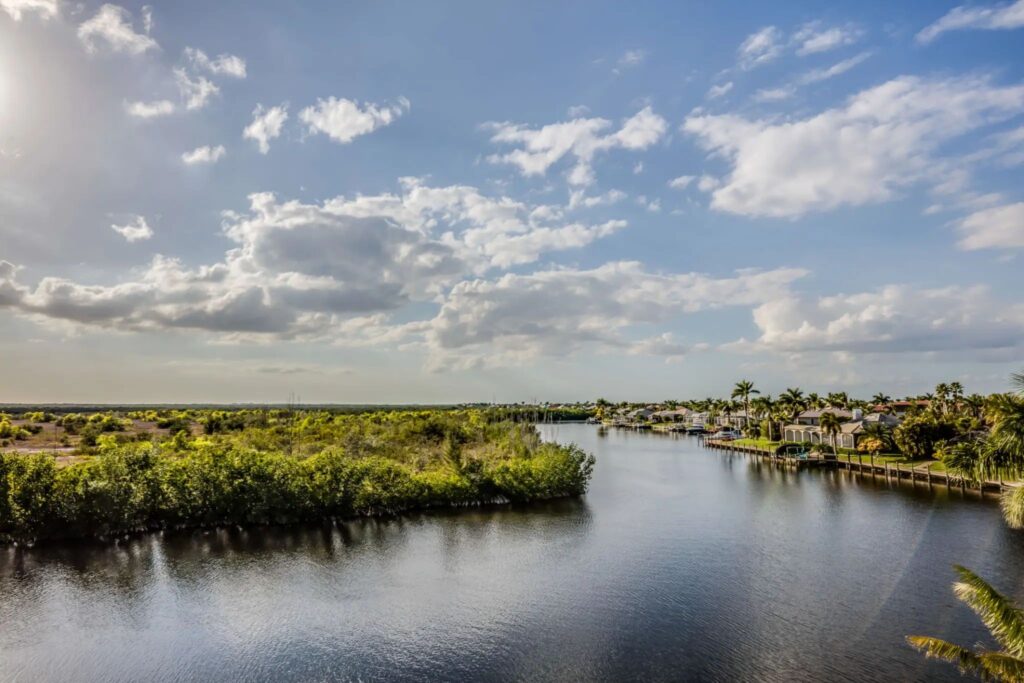
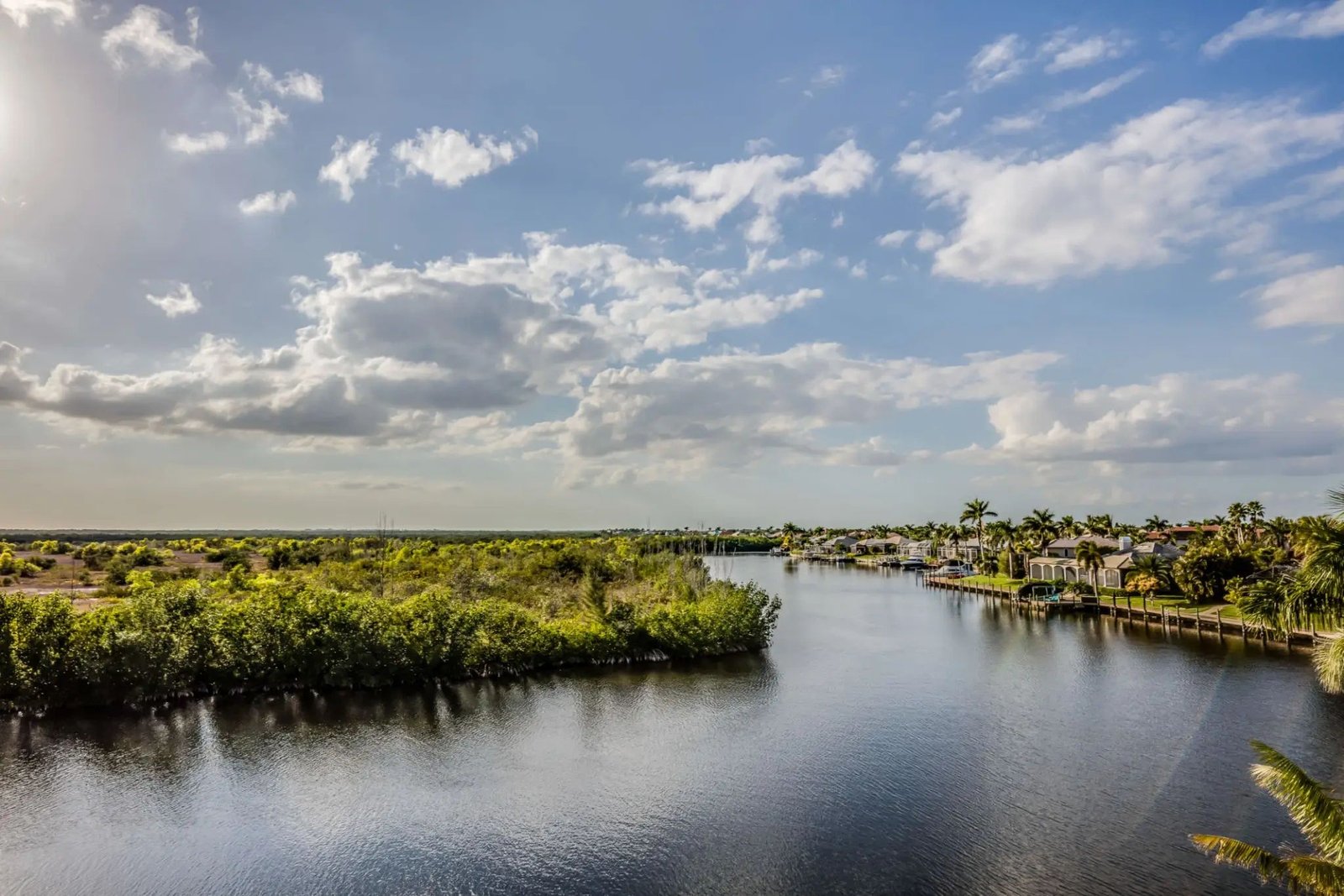
A nursery is a place where young sharks spend their first months or years because it offers food and protection from bigger predators, including adult sharks. The Caloosahatchee River, which forms Cape Coral’s southern and eastern edge, is one of the best-studied bull shark nurseries in Florida.
The river works well as a nursery because it is shallow, warm, full of small fish, and brackish. Adult bull sharks and other large sharks spend more time in saltier water offshore, so the river’s lower salinity gives young sharks a safer place to grow.
What the research found
Two studies by researchers including Colin Simpfendorfer and Michelle Heupel, working with Mote Marine Laboratory, are the backbone of what we know locally.
Young sharks sort themselves by size
A 2005 study in the journal Estuaries sampled young bull sharks across the Caloosahatchee River, San Carlos Bay and lower Pine Island Sound. The smallest sharks, newborns and young-of-the-year, were found in the river. Older juveniles were found farther out in the bays. Average size went from about 83 cm (roughly 2.7 feet) in the river, to about 95 cm in San Carlos Bay, to about 149 cm in Pine Island Sound.
The researchers found that young sharks moved out of the river at around 95 cm, which is roughly one year old. Newborns were caught in June and July, and catch rates were highest in the warmest water, above about 29°C (84°F).
They like brackish water
The same study found the youngest sharks were caught most often where salinity was roughly 7 to 17.5 parts per thousand. Seawater is about 35. In other words, the young sharks preferred water that was well mixed between fresh and salt, which describes much of the lower Caloosahatchee and the brackish edges of the canal system.
The river is home for months at a time
A 2010 study tracked 67 juvenile bull sharks in the Caloosahatchee from 2003 to 2006 using acoustic receivers. Some sharks were detected for more than a year. They used the whole monitored stretch of river, about 27 km, and some moved farther upriver. The authors concluded the population is highly dependent on the Caloosahatchee as a nursery area.
Kayak your canal with confidence
We deliver kayaks free to Cape Coral and most Fort Myers docks, with life vests and a safety whistle. Rentals start at $45 a day. Text us your address and we can tell you whether your canal is likely saltwater or freshwater.
Do bull sharks come into Cape Coral canals?
Yes, into the right ones. Cape Coral has two kinds of canals: Gulf access canals connected to the Caloosahatchee and the Gulf, and freshwater canals that do not connect. Bull sharks can and do follow the tide into Gulf access canals, especially those close to the river. They are far less likely in freshwater canals separated from the river by weirs.
Our Cape Coral canals guide explains how to tell which type you are on. If you are not sure, ask us when you book.
| Where you are | Bull shark likelihood | Notes |
|---|---|---|
| Caloosahatchee River | Present, especially in summer | Documented nursery for young bull sharks |
| Gulf access canals near the river | Possible | Young sharks follow tides and baitfish into canals |
| San Carlos Bay, Pine Island Sound | Present | Older juveniles and other shark species |
| Freshwater canals | Unlikely | Alligators are the bigger wildlife consideration here |
When and where you are most likely to see one
- Season: summer and early fall, when the water is warmest. Newborns appear in early summer.
- Time of day: sharks are generally more active around dawn, dusk and at night.
- Where: near the river, canal mouths, seawalls with baitfish and areas where people are fishing.
- After heavy rain: freshwater releases change salinity, which can shift where young sharks go.
In winter, cooler water means fewer sightings near the surface. Our winter kayaking guide covers what else changes in the cool season.
How dangerous are bull sharks to kayakers?
Bull sharks are large and capable as adults, so it makes sense to respect them. But the sharks in the river and canals are mostly young and small, and they are focused on fish. A kayak is a big, hard object on the surface, not prey.
Most shark bites in Florida happen to swimmers and surfers at ocean beaches, often on the Atlantic coast. Bites on kayakers in calm inshore water are very rare, and the ones that do happen usually involve fishing: a hooked fish, bait or fish being cleaned over the side. The International Shark Attack File at the Florida Museum tracks this every year.
The bigger risks on the water are still the ordinary ones: wind, sun, heat, boat wakes and not wearing a life vest. Our kayak safety guide covers those.
Simple habits that keep you safe
- Stay in the kayak. Do not swim in the river or Gulf access canals, especially at dawn, dusk or night.
- Keep hands and feet inside. No trailing fingers or feet in the water.
- Do not clean fish or dump bait over the side. That is what attracts sharks.
- Avoid areas with lots of baitfish or diving birds. Something is feeding there.
- Give any shark room. Calmly paddle away. Do not chase it for a photo.
- Wear your life vest. If you do fall in, get back in the kayak quickly. Our dock launch guide shows how to get in and out.
- Shuffle your feet if you wade to warn stingrays, which are more common than sharks in the shallows.
Notes for kayak anglers
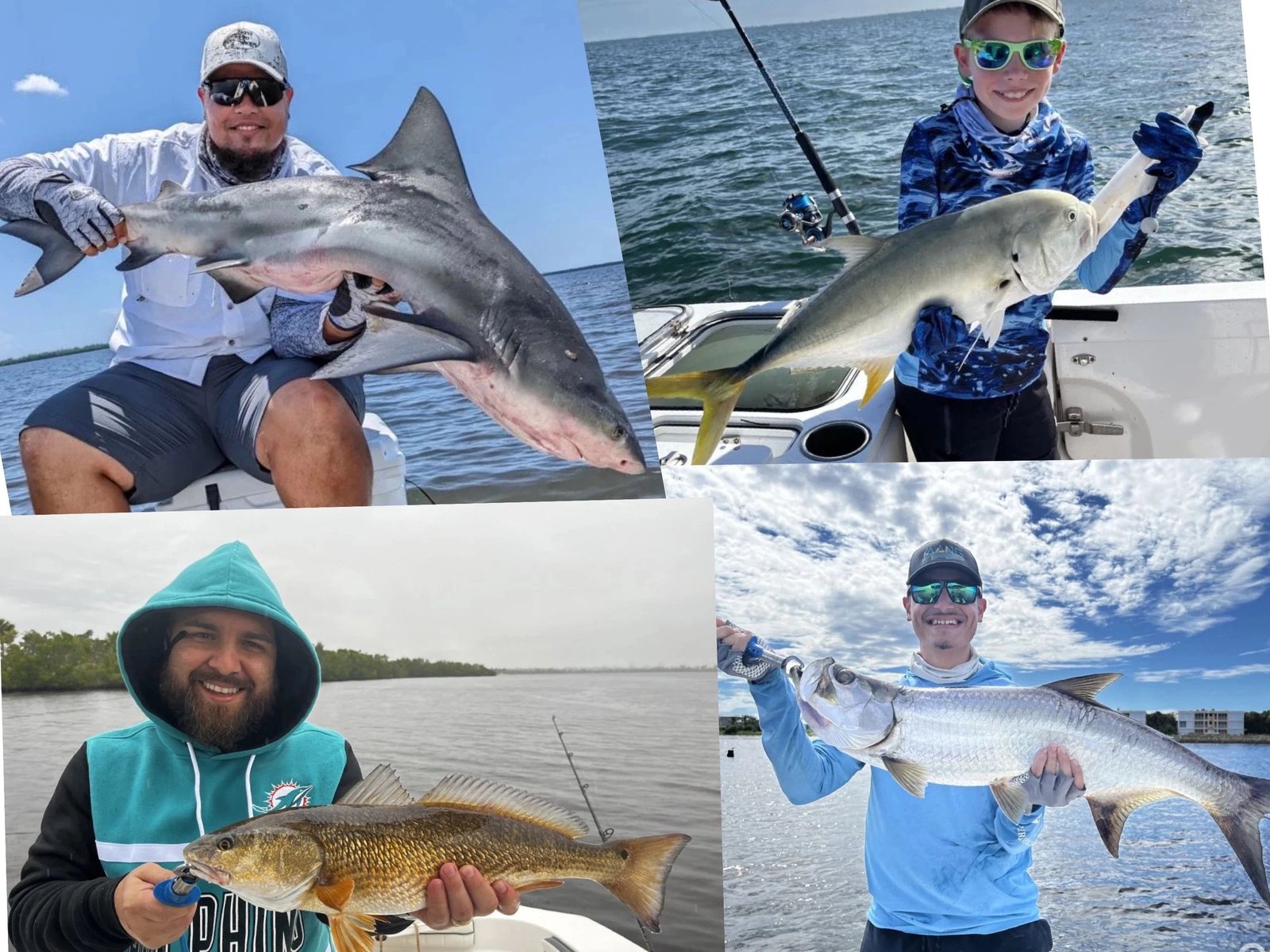
If you fish from a kayak, you will probably hook a shark at some point. Here is how to handle it.
- Use a leader and expect your bait to get bitten off sometimes. That is part of fishing here.
- If a shark takes a fish you are reeling in, let it go. Do not fight a shark for your fish.
- Do not bring a shark into the kayak. Cut the line as close to the hook as you safely can.
- Keep your catch in a cooler, not on a stringer in the water beside you.
- Follow FWC rules, including shore-based shark fishing requirements and protected species. See FWC’s shark regulations.
Our kayak fishing guide covers targets, tackle and spots, and our fishing kayak rental starts at $60 a day.
How to tell a bull shark from a dolphin
Most “shark” sightings from a kayak in Cape Coral are actually dolphins. Here is the quick way to tell:
- Movement: a dolphin’s fin rolls up and over in a smooth arc as it surfaces to breathe. A shark’s fin slices forward and often stays up.
- Tail: a shark’s tail moves side to side, so you may see the tail tip wagging behind the fin. A dolphin’s tail moves up and down.
- Breathing: you will hear a dolphin exhale. Sharks do not surface to breathe.
- Fin shape: a dolphin’s fin is curved backward. A bull shark’s fin is more triangular.
Want to see more dolphins than sharks? Our wildlife guide covers where they show up.
Ready to paddle?
Single kayaks from $45 a day, tandems and fishing kayaks from $60, pedal kayaks from $100. Delivered to your dock, picked up when you are done.
Frequently asked questions
Are there bull sharks in Cape Coral canals?
Yes, in Gulf access canals connected to the river and Gulf, especially near the Caloosahatchee. They are mostly young sharks a few feet long. They are unlikely in freshwater canals.
Is the Caloosahatchee River a bull shark nursery?
Yes. Research by Mote Marine Laboratory scientists found newborn and young bull sharks in the Caloosahatchee, with older juveniles in San Carlos Bay and Pine Island Sound. A tracking study concluded the population depends heavily on the river as a nursery.
How big are the bull sharks in the Caloosahatchee?
Most are young. A 2005 study found river sharks averaged about 83 cm, roughly 2.7 feet. Sharks tended to move out of the river at around 95 cm, about one year old.
Is it safe to kayak with bull sharks around?
Yes, with sensible habits. Young bull sharks are focused on fish and rarely bother kayaks. Stay in the boat, keep hands and feet inside, and do not clean fish or dump bait over the side.
Can bull sharks live in fresh water?
Bull sharks can handle fresh, brackish and salt water, which is why they travel up rivers. Young sharks in the Caloosahatchee were found most often in brackish water of about 7 to 17.5 parts per thousand salinity.
When are bull sharks most active in Cape Coral?
Summer and early fall, when the water is warmest, and around dawn, dusk and night. Sightings near the surface drop in winter.
Should I swim in Cape Coral canals?
We do not recommend it. Sharks in saltwater canals, alligators in freshwater ones, boat traffic and poor visibility are all reasons to stay in your kayak.
What should I do if I see a shark while kayaking?
Stay calm, stay in the boat and paddle away steadily. Do not chase it or try to touch it. If you are fishing, stop casting in that spot.
Is that a shark fin or a dolphin?
A dolphin’s fin rolls up and over as it breathes, and you will often hear it exhale. A shark’s fin moves forward in a straight line, and you may see a tail tip moving side to side.
What should I do if I hook a shark from a kayak?
Do not bring it aboard. Keep it in the water and cut the line close to the hook. Follow FWC shark fishing rules, including those for protected species.
Sources: Simpfendorfer et al. 2005, Estuaries 28(1): immature bull sharks in a Southwest Florida estuary · Heupel et al. 2010, Marine and Freshwater Research 61(1): juvenile bull sharks in the Caloosahatchee · International Shark Attack File, Florida Museum · FWC shark fishing regulations